What Does Rmi Do? Complete Explanation Difference Between Rpc And With Comparison Chart Tech Differences
One of the central and unique features of rmi is its ability to download the definition of an object's class if the class is not defined in the receiver's java virtual machine Rmi allows the client (the thread that actually invokes a method in the remote object) to invoke remote methods in the server (the thread that contains the. All of the types and behavior of an object, previously available only in a singl…
Rmi presentation | PPTX
Remote method invocation (rmi) in java is an api that enables an object in one jvm to invoke methods on an object located in another jvm, either on the same machine or a remote system. It’s like having a remote control for objects that live somewhere else. Java remote method invocation (java rmi) is a distributed object model for the java programming language that retains the semantics of the java platform's object model, making distributed objects.
It is a mechanism that allows an object residing in one system (jvm) to access/invoke an object running on another jvm
Rmi is used to build distributed applications The remote method invocation (rmi) is a highly useful api provided in java that facilitates communication between two separate java virtual machines (jvms) It allows an object to. Java rmi is a technology that allows java programs to call methods across a network on another java virtual machine (jvm)
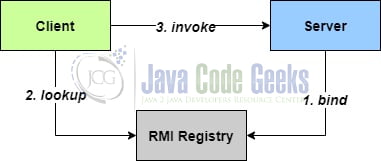
Java RMI - Java Remote Method Invocation Example - Java Code Geeks
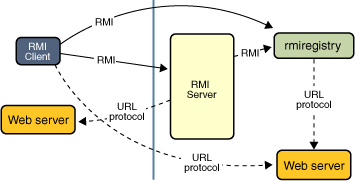
An Overview of RMI Applications (The Java™ Tutorials > RMI)

Rmi architecture | PPTX
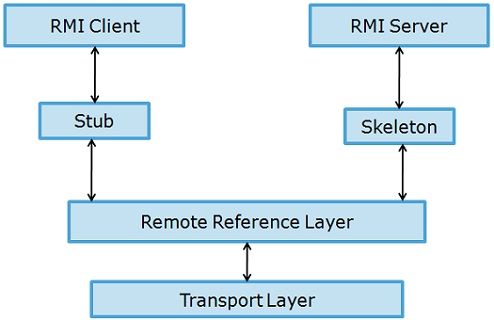
Difference Between RPC and RMI (with Comparison Chart) - Tech Differences

A Flight Instructor's Journal: Using an RMI
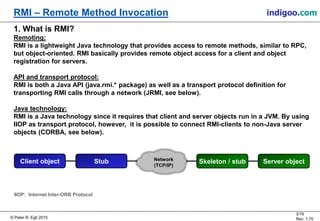
Remote Method Invocation (RMI) | PDF
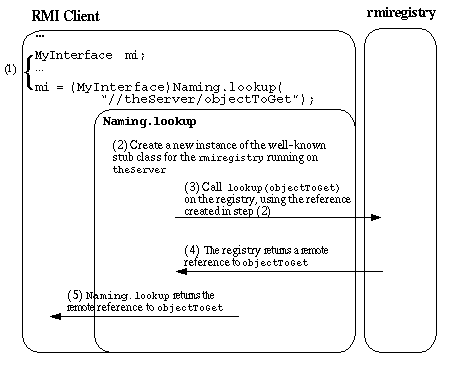
Frequently Asked Questions - RMI and Object Serialization

Remote Method Invocation (RMI) PowerPoint and Google Slides Template
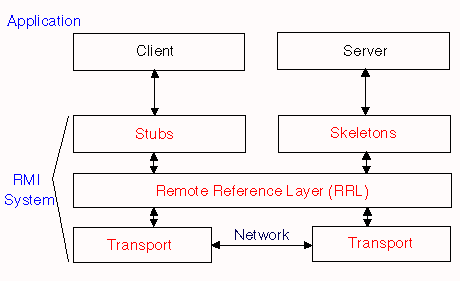
EDM/2 - Introduction to Java Remote Method Invocation (RMI)

Rmi presentation | PPTX